In a crisis-affected community in eastern Myanmar, water is more than a daily necessity — it is survival.
As summer approaches, fear often grows alongside the rising heat. Streams shrink, small ponds dry up, and families begin to worry about how they will find enough clean water for drinking, cooking, and washing.
For families already living with uncertainty, the dry season can become another silent crisis. But this year, something has changed.
With the support of a compassionate donor, in collaboration with Promise Aid, a water distribution storage tank stands at the heart of the village — a symbol of cooperation, resilience, and hope.
From Forest Springs to Community Hands
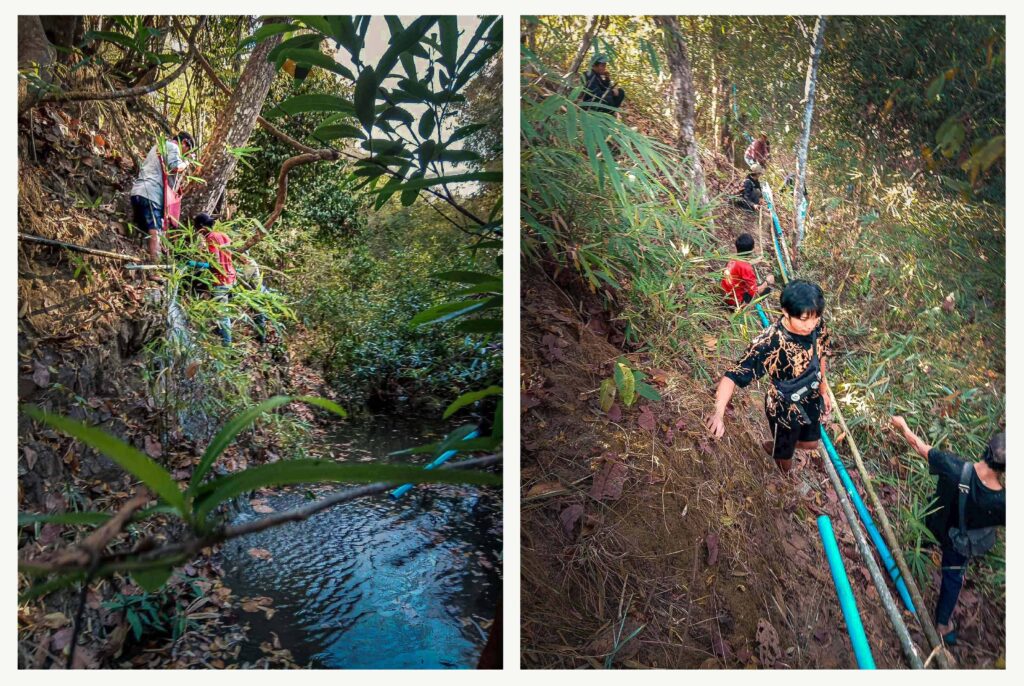
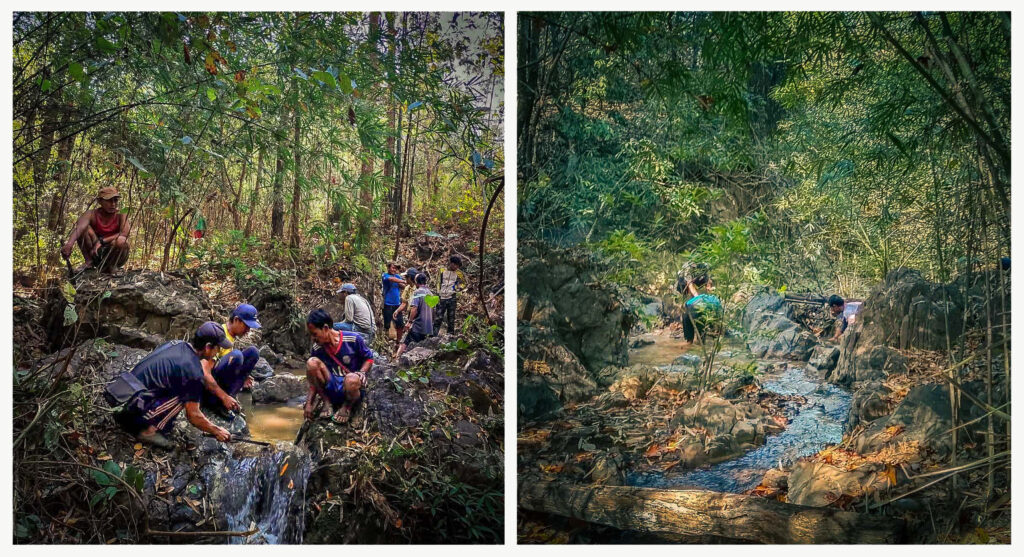
The nearest water sources lie deep in the forested highlands, about 2,000 feet away from the village. One source is an upper creek, flowing gently through wild vegetation. The other is a highland spring, known for its clear and drinkable water.
Reaching these sources is not easy. The path is uneven, surrounded by dense growth and naturally occurring plants. The creek, in particular, often becomes polluted by cowhage (Mucuna pruriens) and other wild plants that grow thick along its banks.
Community leaders organize periodic cleaning activities, gathering volunteers to clear away the overgrowth and keep the water flowing as cleanly as possible.
The spring water, cool and clear, offers a safer source for drinking. Yet the real challenge has always been how to bring this water down from the hills and into the village.
A 2,000-Foot Connection
Recognizing this urgent need, the donor extends support not only for the water storage tank but also for the pipeline system required to connect the distant sources to the heart of the community.
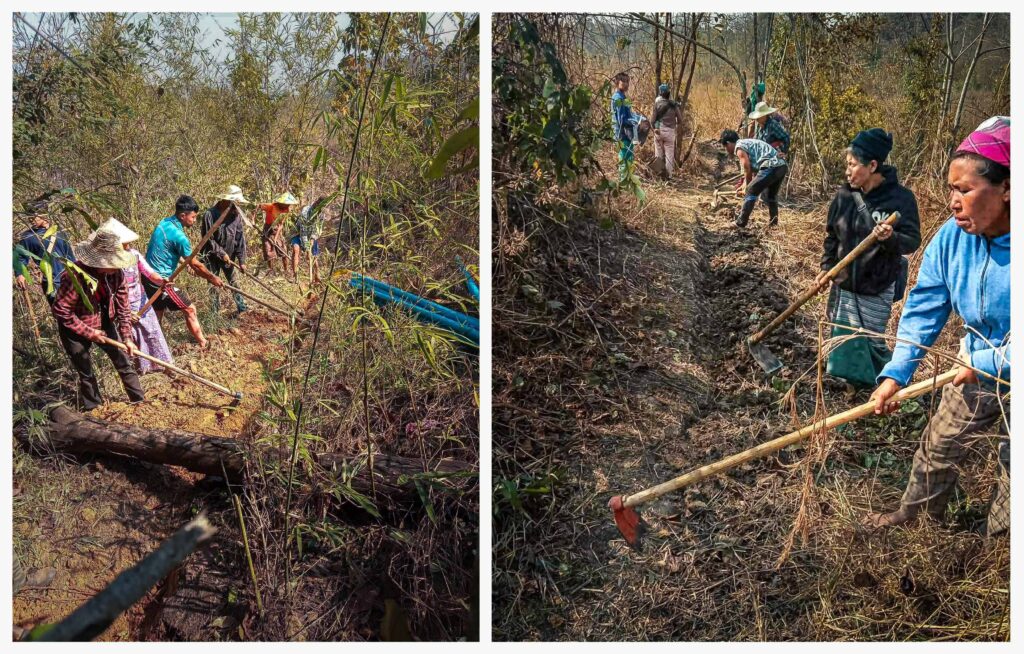
Two thousand feet of pipeline have to be laid across uneven terrain. This is not a task left to machines. It is carried out by the hands of the community.
In the photos, men and women work side by side, clearing wild plants and thick brush along the route. They dig trenches into the hard ground under the hot sun, carving a narrow path where the pipes will rest.
The work is heavy and demanding, yet it is shared labor — each person contributing what they can for the good of all.
Villagers bend over the earth with simple tools, carefully placing pipes into freshly dug trenches. Others clear vegetation from the creek to help keep the water source clean and usable.
Their determination speaks of more than physical effort; it reflects a shared belief that access to water is worth every drop of sweat.
A Tank at the Center of Hope
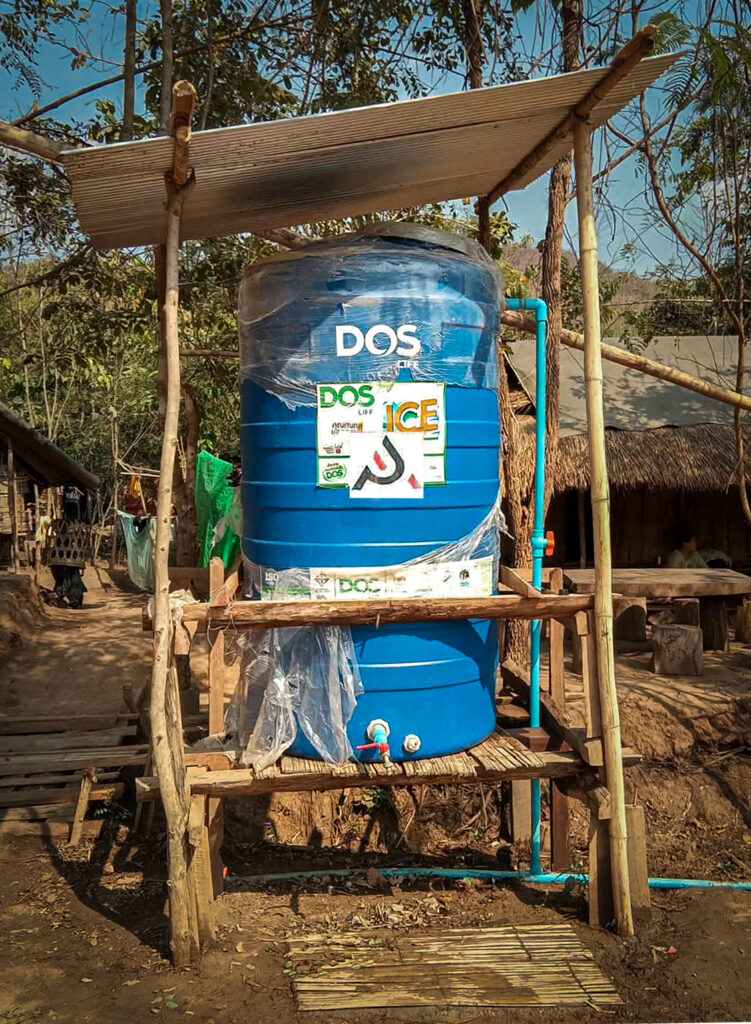
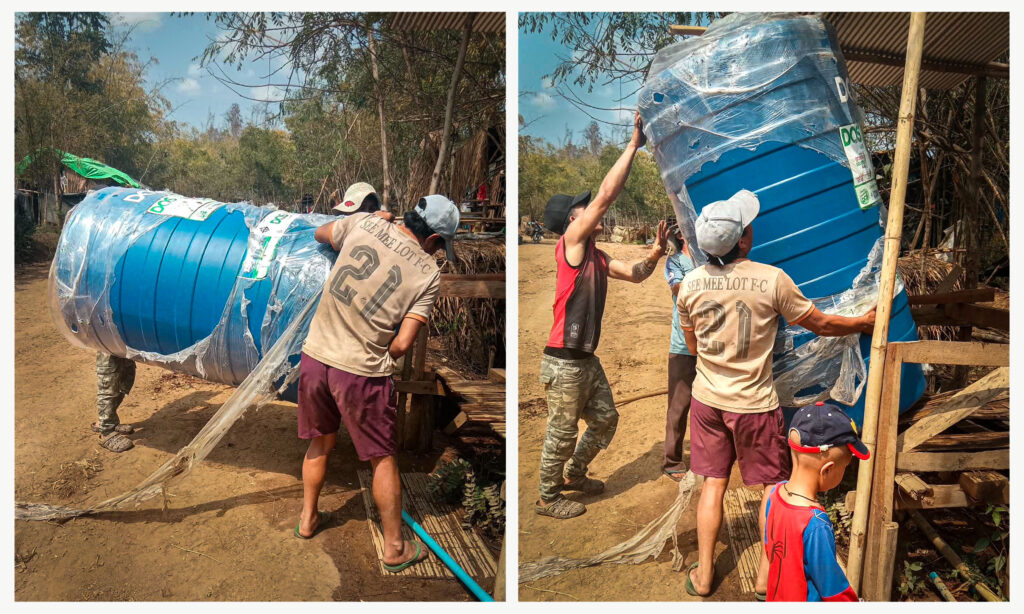
Once the pipeline is connected, the water storage tank is installed in the middle of the village, within easy reach of families who once walked long distances carrying heavy containers.
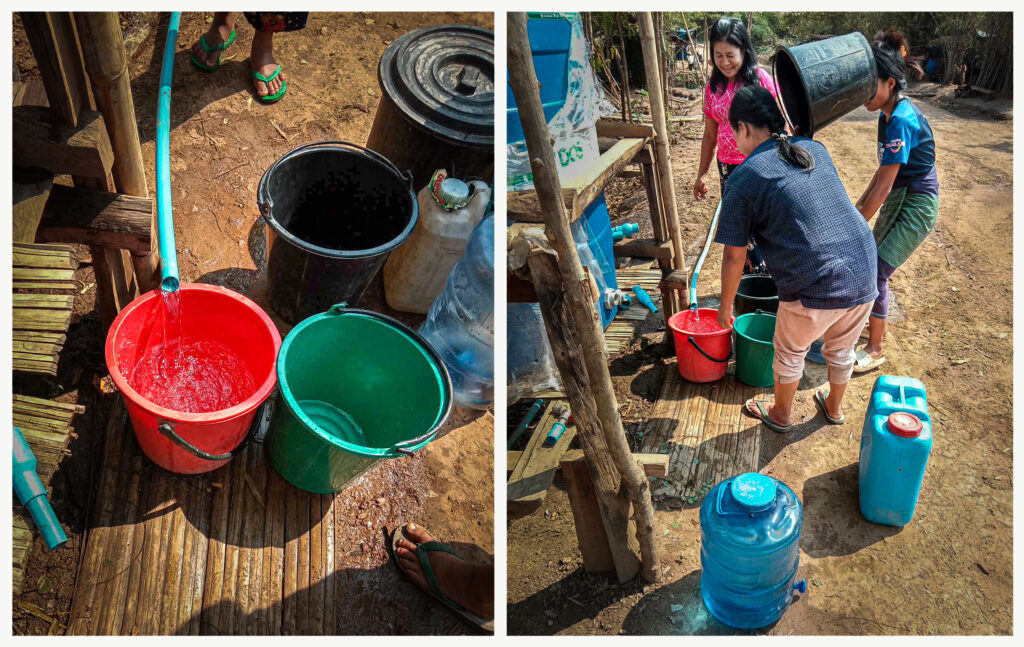
In this photo, even before the tap is installed, women gather around the tank, collecting the flowing water directly from the pipeline with their buckets.
Fetching water is no longer a long and exhausting journey. It is no longer a daily struggle filled with uncertainty. The distribution process has become organized and accessible, reducing risks and saving precious time.
As summer approaches, the community feels more prepared. The fear of severe water shortages has lessened. The new system does not only provide water; it provides dignity, safety, and peace of mind.
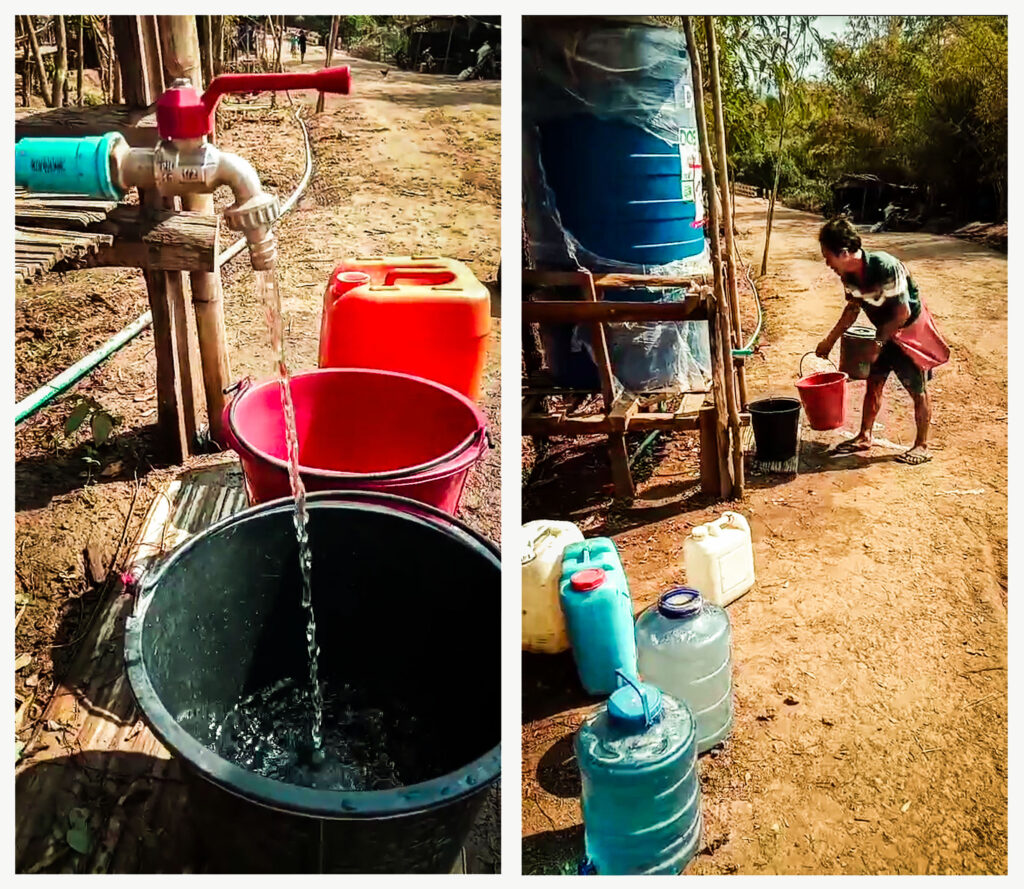
In this photo, the tap is already installed, and a man collects clean water from the storage tank. The water flows steadily, allowing it to be collected safely and conveniently
Together, they create a lifeline that flows from the forest hills into the heart of the village — a steady reminder that even in times of hardship, cooperation and compassion can bring practical, life-sustaining change.
And as the dry season draws near, the sound of water filling buckets carries a simple but powerful message: